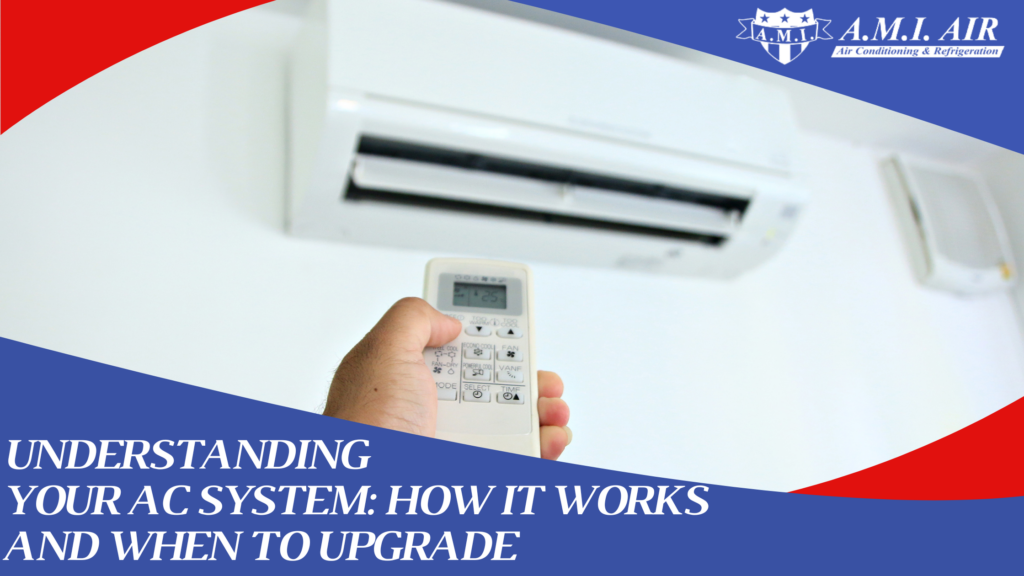
You don’t have to know every technical detail about your AC system to understand how it keeps your home comfortable. A few key parts work together to remove heat and moisture, circulate cool air, and help you keep the temperature where you want it.
Knowing how those pieces fit together can also make repair decisions easier. When something goes wrong, you’ll better understand whether you’re dealing with one repairable part or a system that may be at the point where replacement deserves a closer look.
How Your AC System Cools Your Home
Most central air conditioners have an indoor unit and an outdoor unit working together.
Inside your home, warm air moves across the evaporator coil. Refrigerant in the coil absorbs heat from that air, while the blower sends cooled air back through your ductwork and into your rooms. As the air cools, the system also removes some moisture, which is especially important in South Florida.
The refrigerant carries the heat outside, where the compressor and condenser release it into the air. Then the refrigerant cycles back inside to repeat the process.
Your thermostat tells the system when to start and stop, and your ductwork moves cooled air through the house. If one part of the system has trouble, you’ll often notice it somewhere else.
A Small Problem Can Change How the Whole System Feels
If your house suddenly takes longer to cool, it doesn’t always mean your whole ac system is wearing out. Sometimes, a dusty filter can slow down airflow enough to make rooms feel warmer, even when the AC keeps running.
Other problems show up differently. Water around the indoor unit usually means there’s a drainage issue. If your system starts and stops erratically, a technician may check the thermostat, controls, or electrical components.
The symptom gives you a clue, but it doesn’t tell the whole story. Having a technician check your system is usually more helpful than guessing based on one change in how it works.
When a Repair Still Makes Sense
Repair often makes sense when the problem is small, and the rest of your system is in good shape.
If your AC usually cools the house well, doesn’t need frequent service, and still keeps humidity under control, replacing one worn part can help you get more years out of your equipment.
The cost and type of repair matter too. Fixing a small electrical, drainage, or airflow issue is a much easier decision than replacing a major part on equipment that’s already needed several repairs.
Look at the overall condition of your system, not just its age.
Signs It May Be Time to Consider an Upgrade
Consider replacement if repairs are happening more often, your system can’t keep temperatures even, humidity is hard to control, or the AC runs much longer than it used to. If your energy bills are rising along with these problems, that’s another sign to consider.
A major repair can also change your decision. If your older system needs an expensive part and other components are wearing out, it may make more sense to replace it instead of putting more money into the old equipment.
Make Sure the Problem Isn’t Bigger Than the Equipment
If some rooms stay warmer than others while the AC is running, the unit itself may not be the problem. Leaky, damaged, or poorly sized ductwork can keep cool air from reaching every room, so replacing the equipment alone may not fix those hot spots.
The size of your new system matters too. If it’s too big, it can cool the house quickly but won’t remove enough humidity. If it’s too small, it may struggle to keep up during South Florida’s hottest days.
AMI Air Can Help You Decide What Comes Next
If your ac system is struggling, needs frequent repairs, or just isn’t keeping your home comfortable, AMI Air can help you look at your repair and replacement options. Their technicians serve homeowners throughout Broward County and nearby South Florida communities and can help you decide what makes sense for your system and home.